
Recent Posts

Istanbul and Some General Thoughts on Turkey

The scale is astonishing as one walks along the weathered marble road into the center of Ephesus. At the fulcrum a massive amphitheater, once capable of seating over 25,000 roaring onlookers still stands its ground triumphantly welcoming visitors. The largest preserved citadel of ancient Mediterranean civilization, Ephesus is a sprawling maze of temples, housing complexes, libraries, markets, and public spaces. It’s a tangible testament to the might civilization’s early champions wielded. Perhaps the most notable structure of the city’s remains, The Library of Celsus, is a reconstructed marvel of the exceptionally ornate Roman architecture of the early first century AD. Marveling at the obscene detail carved into the imported marble it is not unreasonable to argue that this caliber of architecture hasn’t been created since.

Another long bus ride, some hitchhiking, and a few fierce bouts of dolmus fare bartering got me to the brink of a refreshing dip in the strikingly blue Mediterranean. I had exceptionally high hopes for the famed body of water. The vibrant color gradient had been adorning postcards since I entered Turkey, and the relentless heat made it all too appealing. Following a trail of internet forum posts I arrived to the Saban Treehouses in the town of Olympos to begin my coastal exploration. Sort of an unpolished bungalow situation, the tree houses offered private accommodation, breakfast, and a truly spectacular dinner each evening for a price that simply could not be passed up. From a budget backpacking, beach destination, stuff your face with tasty Turkish delights perspective, there is simply not a better deal on the planet. I settled in for a few days to rest some weary legs.

I half expected to be mauled by Dino, Fred Flintstone’s pink dinosaur, as I disembarked from my bus in Göreme. Perhaps a brontosaurus powered excavator or a pterodactyl delivery vehicle would be around the first bend in the road. A surreal arid landscape of organically shaped ‘fairy chimneys’ surrounded the touristy town center. Shops and hotels were dug into and grew out of the skin-tone stone walls, replicating the ancient cave dwellings littered about the area. It’s a truly bizarre aesthetic almost certainly unique to the Cappadocia region of Turkey.

I nearly jumped out of bed as the siren of a deep and somber voice ripped through the quiet night. Every dog throughout the city of Kars erupted in a howling barrage at the onset of the day’s first call to prayer session. I have never traveled in a Muslim country before, and the concept was completely foreign to me. Each minaret, the tall tower attached to a mosque, carries a battery of loud speakers and five times a day they ring out, opening and closing the day’s prayer sessions.

It was a long bumpy day of marshrutka rides from just below the Russian border, across all of Georgia, to the small nation’s southernmost point. From the towering alpine range of the Caucasus I bounced on loose suspensions through fertile valley farm land, expansive dry cattle pasture, and eventually into the rocky, yellow lowlands of the south. I caught sunset over the Kura River and the beauty helped ease my aches and pains from a full day crammed in people movers.

Back in Tbilisi I strolled the comfortable, attractive streets in search of delicious eats to satiate an endless hunger developed over the past week of hiking. I found my return visit to this delightful city could not have been timed better. Raspberries, nectarines, apricots, and watermelons all seemed to hit peak season in perfect sync and the streets were flooded with mindbogglingly fresh and cheap produce. One vendor, slinging his berries by the bucket load, stopped me in my tracks. I needed a double take to believe my eyes, was I dreaming? For less than two dollars I became the proud owner of more than a kilogram of ruby red, firm yet juicy, raspberries. Add in a carton of ice cream and a nightly harvest festival ensued until my payload was depleted. Again I could feel myself being sucked in by Tbilisi’s magic. If I lingered a little to long, there may be no escape. To break the spell I bought a sleeper train ticket to Zugdidi; from there I would meet a marshrutka driver who would usher me back into the Caucasus.

I thought I had overcome the obstacles others had failed to conquer. The challenge had come and gone. I let out a sigh of relief and relaxed my guard upon a successful climax of the hike and relished in the accomplishment.

A rag tag militia of Mitsubishi Delicas awaited my arrival to the small in-between town of Alvani. I assume the assembled mass of drivers would generally prey upon two travelers who make their way to the main intersection, but seeing as Abi and I had already paired up with our 4x4-van hybrid nobody bothered to leave the comfort of shade. I was surprised to see the aforementioned vehicle in such quantity here as a friend back home had recently told me it was becoming quite popular to convert these 90’s Japanese rovers into overland travel vehicles. If they are in short supply back in the U.S. it’s because they have all ended up in Georgia. For two hours I waited at the intersection with my driver and hordes of others, all of whom were praying today was the day visitors arrive, no one wanted to miss opening weekend. I was headed into the Caucasus Mountains, to the region of Tusheti, and this high altitude range has a very short tourism window. Mid-June - mid-September pretty much sums it up but a big snow season on either side can shorten that spread. The drivers, all eager to fill a car for the five hour ride, don’t want to miss a chance at what can be a relatively nice payday by local standards. I should have taken it as a warning sign that no other visitors ever came; eventually my car departed.

Every culture lays claim to some gift they developed and gave to the world. But few countries can argue that their contribution is perhaps the most cherished delicacy of all time. In what is now Mexico chocolate was pioneered, and the origin of coffee can be traced back to regions in Ethiopia, but Georgia holds the royal flush in this global secret Santa, because Georgia gave us a truly magical beverage, Georgia gave us wine.

A bit after midnight an old, yet seemingly sky worthy Wizz Air craft bounced onto the tarmac at Kutaisi international airport. The plane offloaded via a hand pushed rolling staircase. It was a short, unsupervised walk over to a small door reading ‘customs’ in English below a long string of unrecognizable characters. There were no formal lines so the mass of people piled into a tiny hall where two customs agents rapidly stamped passports with no regard for what kind of document was handed to them. Georgia’s government is all about tourism these days, and their eagerness to let outsiders in was obvious. Bags arrived promptly on the lone carousel. Before even checking if the airport had WiFi I was in and an armed police officer strapping well-worn soviet firepower was happy to watch Abi and I bobble around the unfamiliar language, eventually setting us up with a taxi. I had no idea, not even a preconceived notion, about what I would see outside the airport. The road was dark so first impressions included nothing more than a straight road ahead and the occasional dim, fluorescently lit, petrol station.

In stark contrast to U.S. customs, a kind, older Brit was quick to offer his two pence on the best way to get from Heathrow to King’s Cross and saved my mom and I a few pounds in the process. Stamp in passport, to the tube I went. I was on a mission with my four hours in London and Big Ben was ticking. By complete coincidence my lifelong friend Elliot happened to be in London for work and it would have been a shame to miss the small window during which we could meet up. A quick pizza lunch with my mom and his girlfriend was just like the old days back in New Jersey, unfortunately, our visit was short; business called and I had a train to catch.

Brisk air filled the jet way, the tropics were nowhere to be found. It seemed the northeast’s brutal spring was making its last stand. A two mile line awaited me as I entered the customs terminal, and what felt like an eternity elapsed as I listened to the less than compassionate line clerks squawk at cellphone usage like middle school teachers. Eventually, I was called to a booth, my internal self shamed for not having acquired Global Entry before my departure. An angsty customs agent grumbled at me as he scanned my passport and shooed me away as though my arrival was an unexpected inconvenience. Newark International hadn’t changed a bit.

It’s always striking how perspective can change and Lima has felt like the anchor point for these shifts throughout my trip. Landing in Lima for a third time, my journey from the airport was a wild one. It’s pretty rare for tourists to take the public bus from the airport, but it’s the perfect window into working class Lima and the price is right so I opt for this route. The bus stop is a lively, chaotic place. Small minibuses drift into the pickup zone from the highway at full speed. Fare collectors hang out the sliding doors hooting at other busses as they narrowly avoid collision. Yelling out in an undecipherable shorthand where the bus is going. Locals pile in and out. Before the dust settles from such an aggressive entrance the tires squeal, peeling out back onto the main road. As I waited for my bus, a rather comfortable public shuttle not dissimilar to what you would find in NYC or Paris, I marvel at this loosely organized system and how efficient it does appear to be, moving people rapidly with little fuss. It’s also a bit of a shock to the system. After three months in Chile, I had forgotten how much looser things tend to be in Peru and it was exhilarating to be tossed back into the frenzy.

It was close to three months since I last found myself in a proper city, and only minutes elapsed before I was entranced by Valparaiso. In route to an Airbnb the narrow winding roads zipped by my colectivo’s window, leaving long-exposure trails of brightly colored facades in its wake. One turn off the main drag and I was instantly lost in this city of hills. Hidden staircases, adorned in spray can acrylic, branch off in every direction creating a vast web of interconnection amongst the earths undulating surface. Dead ends cease to exist. I gazed out upon the city sitting above and below me from a small lookout at the edge of my street. Beyond the port, outside the harbor, the open ocean played horizon to the rising sun offering a personal welcome.

Rain was tailing me as I forged on through the lakes district. The dark clouds and damp air I had attempted to abandon leaving Patagonia had no intention of releasing me. Disembarking a bus in the tourism hub of Pucon, I found myself in a familiar situation; a planned hiking itinerary had been dismantled by Mother Nature and I was relegated to waiting it out in the hostel. With time to pass and a well equipped kitchen on premises I took on a task I had been thinking about for a while. In prior accommodation, a similar rainy day situation encouraged a French cyclist to spend the day preparing a feast for herself and her cycling companions. It had been their first real kitchen in weeks and she went all out, which included baking a fresh loaf of bread. Though delicious in appearance and smell I thought, no, knew, I could do better. I don’t like being second fiddle when it comes to my hobbies and took her public bread display as a personal challenge. Wallowing in a grey state of fog and precipitation I grabbed a bag of flour and got to work.

Out of Patagonia I embraced the long lost comforts of modern development and the tourism hub of Puerto Varas had all the fixings. Beyond comfortable beds and hot water on demand, delicious sweets were readily available along with the best coffee I had encountered in all of South America. A not too shabby brewery on the outskirts of town was a welcomed treat to a parched palate and I quickly became a regular at a young, former boutique chef’s, gourmet empanada outpost. A local farmer’s market and butcher shop rounded out my rapidly developing daily routine, as my disdain for the rain encountered upon arrival eased. I was happy to stay put here for a while. On day three in town the rain cleared and clouds finally lifted, immediately blown away by what I saw, the reason this town is a must see became abundantly clear.
WARNING: THIS POST IS NSFMS (NOT SAFE FOR MOMS)
KILOMETERS 0 - 160: VILLA CERRO CASTILLO TO COYHAIQUE
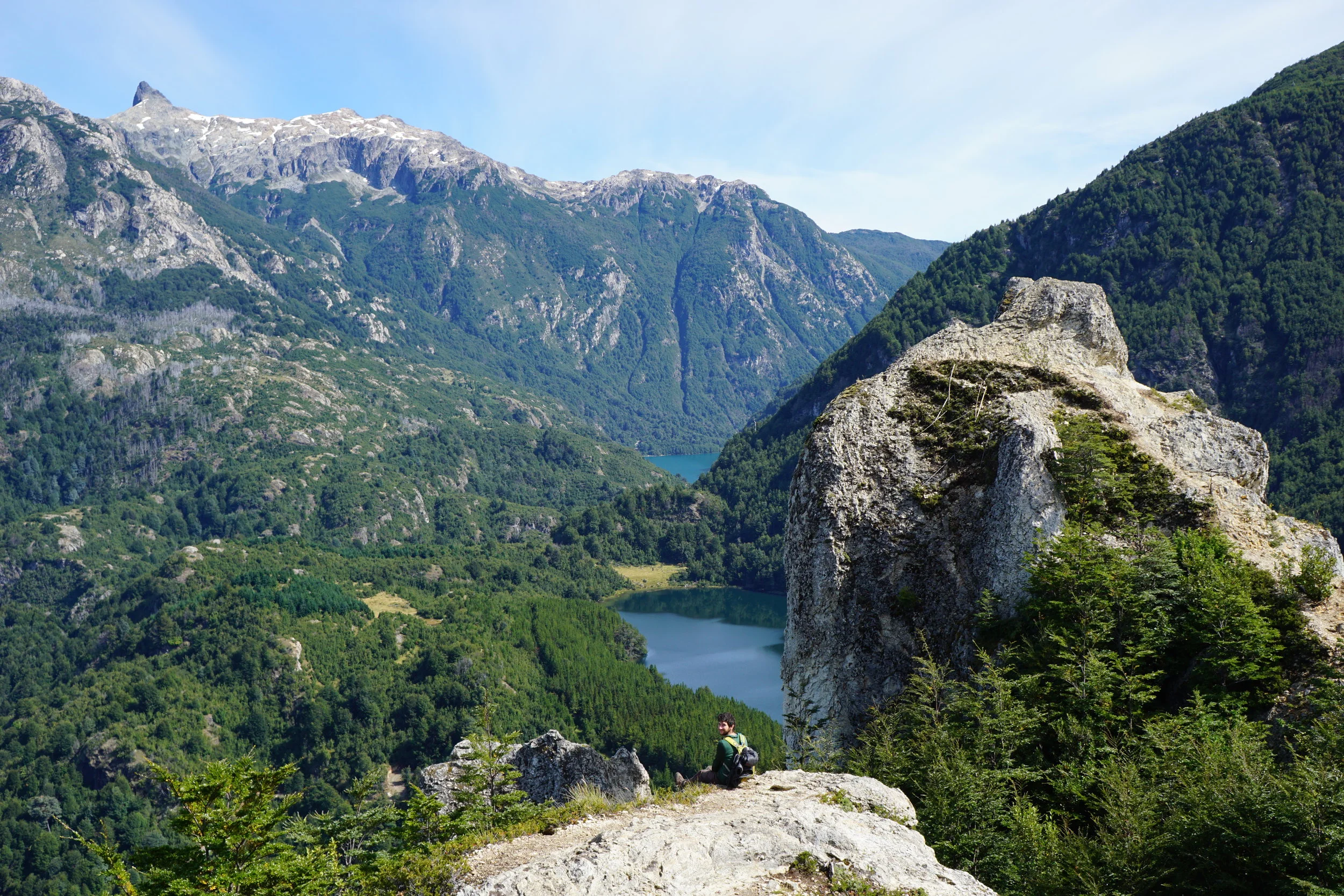
I wasn’t first to arrive at the bus stop shelter. Following etiquette, I had to move downstream until the group ahead found a ride. Being new to the game, I didn’t quite have my system in order yet as I walked down the road. My spot was difficult for cars to see, and the limited pull off space and short decision making zone all set me up for failure. Ignorance is bliss though and I gleefully tossed my thumb up into the wind as the first car zipped by. It was day one on the Caraterra, and my first time actively hitchhiking as a primary means of transportation. It’s worth noting that in Chile hitchhiking does not bear the same reputation as in the U.S. and generally speaking, it is a completely normal and acceptable way to get around. On the Carretera this is amplified and has taken on a life of its own. Luckily it was shoulder season so the main hoards of travelers had disbanded, but at times competition for rides can be fierce on this legendary stretch of tarmac and dirt. Maybe it was my positioning, or simply a lack of seasoned aura, but I think my experience level on the road was obvious to the other group; they caught a ride and brokered a deal for Abi and I to hop in the trunk. My first pick up was out of the way and with limited effort I found myself in Villa Cerro Castillo.
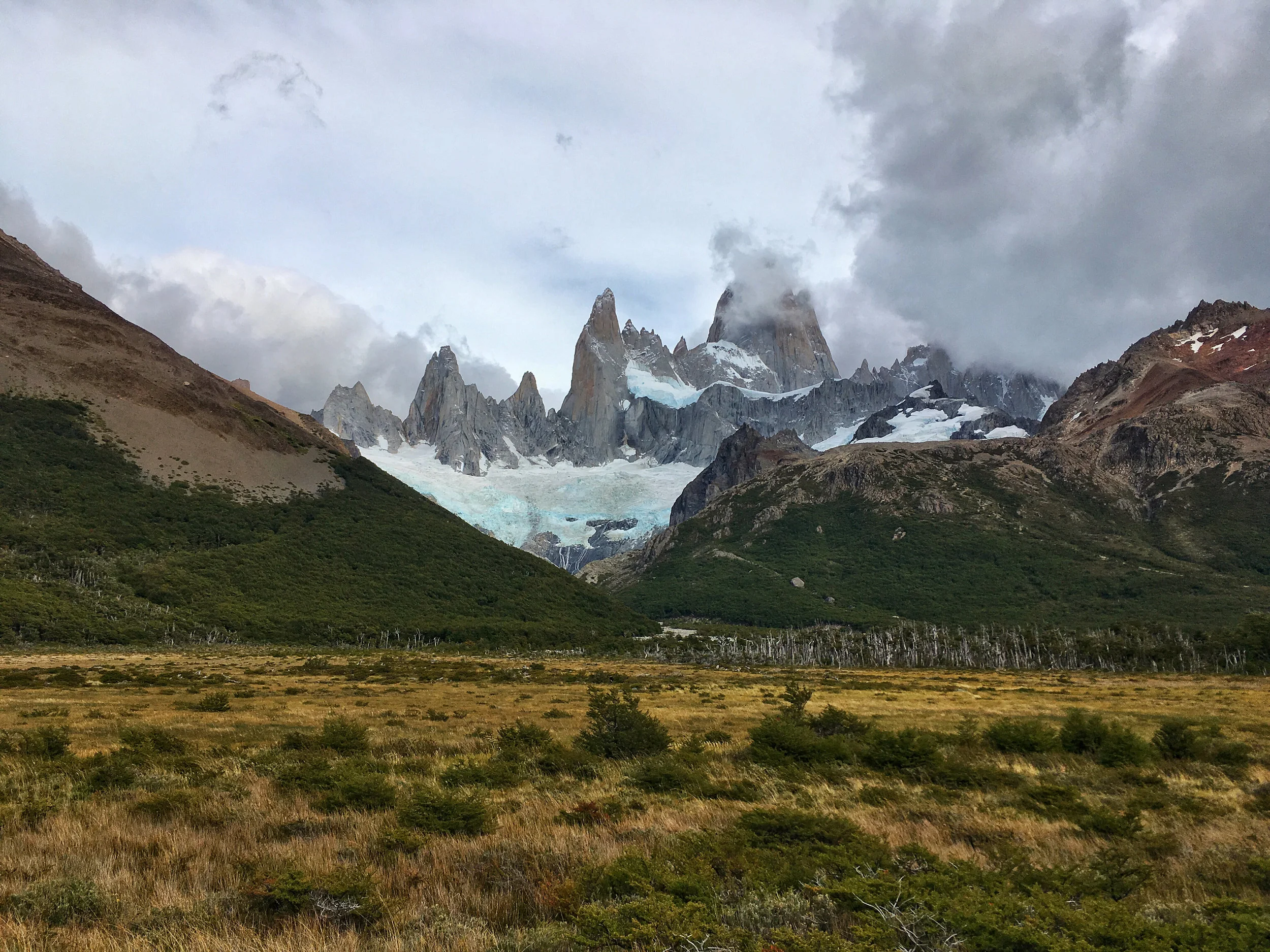
Flying to the edge of the world was easy, working my way back into civilization proved more challenging. My goal was to intercept the Carretera Austral, the only road through Chilean Patagonia, but limited onward travel options from Puerto Natales didn’t help much in getting me there. There is a ferry back to Puerto Montt but then working my way back south only to be stuck again seemed silly; as did returning to Punta Arenas and flying. By road in Chile it’s impossible as the Southern Patagonian Icefield, the largest non-polar glacial region in the world, stands in the way. Without a clue of what to do, I found my answer at the bus terminal in the form of a ticket across the border to Argentina.

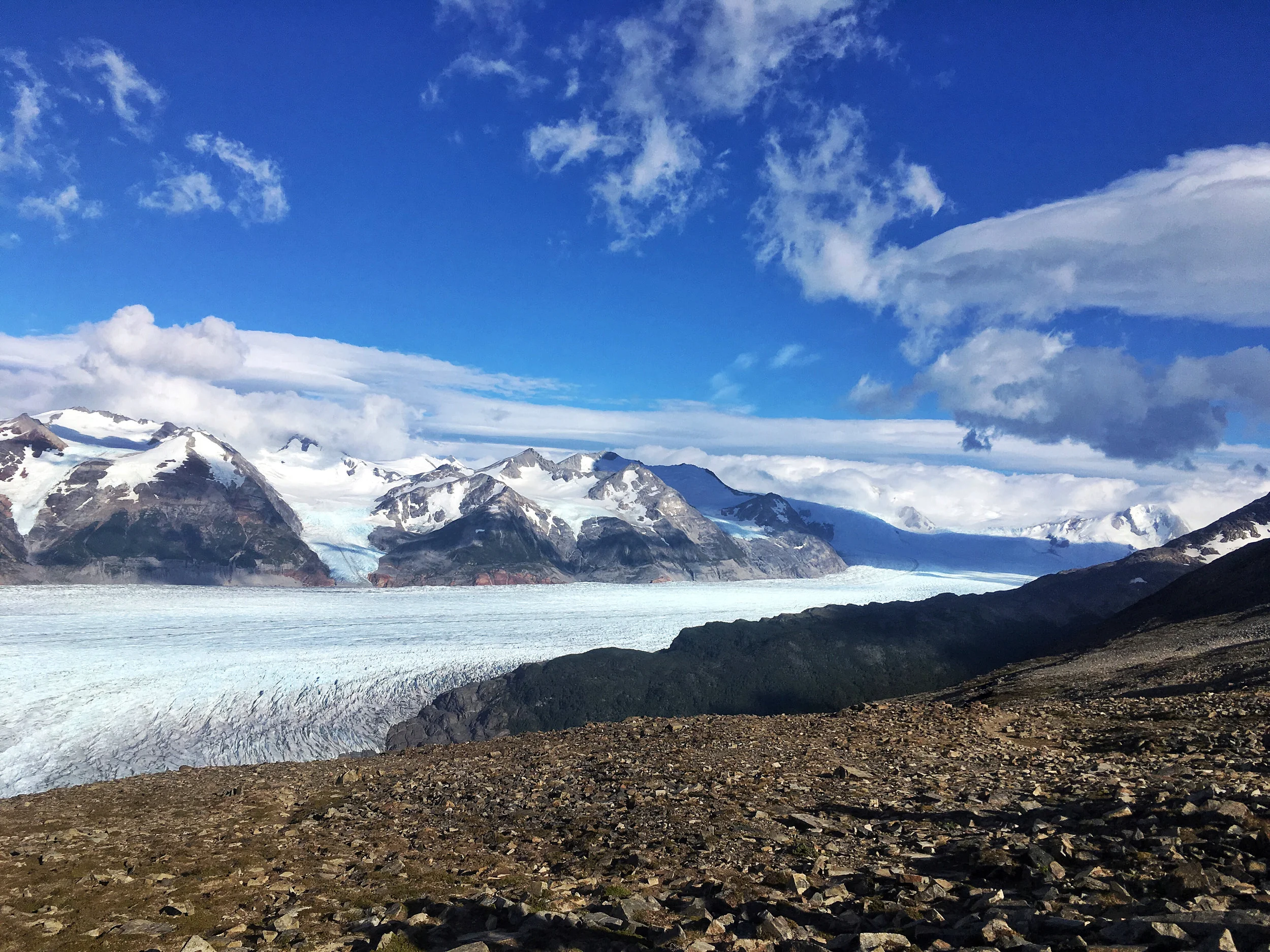
There are few, if any, national parks in the world with the level of accolade and infamy that surrounds Torres del Paine. The grandeur of its natural features, the remoteness of its location, and the brutality of its weather all combine to create a marvelous beast of an attraction and a notch that every outdoor enthusiast would like to add to their belt. There are many ways to explore the crown jewel of Patagonia, but I opted to go all out and hike the famed ‘O’ Circuit. The 8 day / 7 night stroll covers something on the order of 130km and is nothing short of spectacular, but it’s challenges begin long before you step foot on the sacred trail.

When I decided on South America as stage one of my travels I had never been on any particularly long trips before. Sixteen days was the longest period of time I had spent abroad, and that was work related. I initially earmarked three months to explore Peru and Chile, but before my flight to Lima even boarded, it was clear that wasn't going to cut it. In the roughest of pre-trip outlines my final adventure was going to be hiking the world renowned 'O'-Circuit in Torres del Paine National Park. Then I would head back to Santiago and continue onward to my next destination. In reality my pre-booked campsite reservations (the only premeditated activity upon embarking, out of necessity) eventually turned my leisurely stroll through Peru and Bolivia into an all out sprint down to Southern Patagonia. Here I stand in central Chile, with five days to cover about 2500 km.

I staggered off the bus from Santiago towards Lonquimay at 7:00am with no idea what to expect. I had been nervously dozing off, alarms set at 20 minute intervals. My ‘stop’, if you can call it that, was 2km outside the town Malalcahuello. Each signature iPhone chime (yes I now have an iPhone, yes I know that makes me a traitor) sent chills down my spine that I had missed it, and was now lost for good in the Chilean country side. I was instructed to exit the bus at road marker 88.7km on Ruta 181 and there I would find my home for the next month. It all worked out, I clumsily confirmed the location with the driver, grabbed my bag and was greeted by my soon to be roommate. I ate some breakfast, acquainted myself with the new surroundings, and slowly eased into a very different lifestyle than I have ever known.

After two and a half months traveling in developing countries, entering Chile came with sticker shock. Prices on basic items went up close to ten-fold from Bolivia. My usual $6-$8 a night (breakfast included) for accommodation rocketed towards $20+ and nothing beyond instant coffee was provided...maintaining my budget was going to be much trickier here.

Bolivia is full of amazing and wild places but as far as tourist draw is concerned, one exist in a league of its own: The Uyuni Salt Flats a.k.a Salar de Uyuni. Almost any South American travel itinerary includes a trip through the unique landscapes that lay between the little town of Uyuni, Bolivia and the tourist hub of San Pedro, Chile. There are many places to take a trip from, and an ungodly number of agencies hawking them, but once you and your five companions load into that Toyota Land-Cruiser, you enter a different planet. However, the itinerary of a Uyuni trip is pretty set no matter what any guide agency may tell you. So over the course of three days it’s pretty rare to have a moment to yourself; your extra-terrestrial explorations might include many extra, terrestrial beings.

After my long stay in Sucre it felt good to be back on the move. There was still so much ground to cover in Bolivia and now I had kindergarten Spanish under my belt; what could hold me back? Perhaps a live and active road blockade in the city of Potosi, that could do the trick... About 5km outside the high altitude mining town an inconveniently placed tractor trailer made it pretty clear the bus was going no further. Everyone unloaded with limited fuss, it seemed this was not as uncommon as it felt. The rest of the journey downtown would be made on foot.

On New Years Eve I embarked for Sucre, the capital city of Bolivia. I expected a fairly light travel day as the distance from point A and point B was not that far; my expectations were not met. Starting at 3:00AM and arriving at 10:00PM all but knocked me out. Perhaps this year I would celebrate from the comfort of bed. Of course, upon arrival the hostel was lively and quickly a trip to the main square materialized.

There are two stories to tell of my time spent in Sajama National Park. The overarching tale is one of a place seldom traveled. An untamed, wild land that distorts perspective with its scale and challenges wits with its weather and terrain. The subplot of this epic is the truth turned legend of Pico the dog; and the life threatening misadventure of this 13 lb. Shih Tzu.

From southern Peru you can hop on an overnight bus, cross the Bolivian border, get your stamp at immigration, and be on your way. This is the experience travelers from Australia, Canada, France, Germany, and most other developed countries will have. Unfortunately, if your passport is blue and says United States on it, things will not be so easy. U.S. - Bolivian relations have been stressed for decades. Outspoken Bolivian disapproval of U.S. policies, questionable U.S. intervention on Bolivian soil in the name of the “war on drugs” and general governance disagreements have not fostered an atmosphere of trust between the two. It’s quite hard for a Bolivian visitor to receive a tourist visa for the U.S. and thus, in reciprocity, Bolivia treats visitors from the states in the same manner.

Cusco is the tourism hub of Peru, and for good reason. The city is quite unique, the central downtown rests in a large valley, the remainder radiates out and up the surrounding mountains. At night the hills light up like stadium seating shining flashbulbs on you from all angles. History and fast food, luxury hotels and stray dogs coexist in harmony. Where coffee shops and fake alpaca sweater vendors now stand, the Incan king once sat upon his throne. Incan building foundations stand strong, supporting the Spanish colonial buildings which reside in the late civilizations capital. It is the jumping off point for any trip to Machu Picchu and the historic relevance of the city is unrivaled in South America. Cusco, in its modern form, is built for travelers, loaded with great food, coffee, hostels, markets, and entertainment options. Upon arrival it was clear that this was a place I could hang around for a while.

From a travelers perspective the city of Puno is fairly lacking...The food is standard at best, accommodation options are limited, and overall there isn’t much too see. Never the less the city pops up on just about any Peruvian itinerary. People visit the city for the singular reason of Lake Titicaca; and on first inspection, I was not impressed.
Bolivia
Bolivia is full of amazing and wild places but as far as tourist draw is concerned, one exist in a league of its own: The Uyuni Salt Flats a.k.a Salar de Uyuni. Almost any South American travel itinerary includes a trip through the unique landscapes that lay between the little town of Uyuni, Bolivia and the tourist hub of San Pedro, Chile. There are many places to take a trip from, and an ungodly number of agencies hawking them, but once you and your five companions load into that Toyota Land-Cruiser, you enter a different planet. However, the itinerary of a Uyuni trip is pretty set no matter what any guide agency may tell you. So over the course of three days it’s pretty rare to have a moment to yourself; your extra-terrestrial explorations might include many extra, terrestrial beings.
After my long stay in Sucre it felt good to be back on the move. There was still so much ground to cover in Bolivia and now I had kindergarten Spanish under my belt; what could hold me back? Perhaps a live and active road blockade in the city of Potosi, that could do the trick... About 5km outside the high altitude mining town an inconveniently placed tractor trailer made it pretty clear the bus was going no further. Everyone unloaded with limited fuss, it seemed this was not as uncommon as it felt. The rest of the journey downtown would be made on foot.
On New Years Eve I embarked for Sucre, the capital city of Bolivia. I expected a fairly light travel day as the distance from point A and point B was not that far; my expectations were not met. Starting at 3:00AM and arriving at 10:00PM all but knocked me out. Perhaps this year I would celebrate from the comfort of bed. Of course, upon arrival the hostel was lively and quickly a trip to the main square materialized.
There are two stories to tell of my time spent in Sajama National Park. The overarching tale is one of a place seldom traveled. An untamed, wild land that distorts perspective with its scale and challenges wits with its weather and terrain. The subplot of this epic is the truth turned legend of Pico the dog; and the life threatening misadventure of this 13 lb. Shih Tzu.
From southern Peru you can hop on an overnight bus, cross the Bolivian border, get your stamp at immigration, and be on your way. This is the experience travelers from Australia, Canada, France, Germany, and most other developed countries will have. Unfortunately, if your passport is blue and says United States on it, things will not be so easy. U.S. - Bolivian relations have been stressed for decades. Outspoken Bolivian disapproval of U.S. policies, questionable U.S. intervention on Bolivian soil in the name of the “war on drugs” and general governance disagreements have not fostered an atmosphere of trust between the two. It’s quite hard for a Bolivian visitor to receive a tourist visa for the U.S. and thus, in reciprocity, Bolivia treats visitors from the states in the same manner.

Chile
It was close to three months since I last found myself in a proper city, and only minutes elapsed before I was entranced by Valparaiso. In route to an Airbnb the narrow winding roads zipped by my colectivo’s window, leaving long-exposure trails of brightly colored facades in its wake. One turn off the main drag and I was instantly lost in this city of hills. Hidden staircases, adorned in spray can acrylic, branch off in every direction creating a vast web of interconnection amongst the earths undulating surface. Dead ends cease to exist. I gazed out upon the city sitting above and below me from a small lookout at the edge of my street. Beyond the port, outside the harbor, the open ocean played horizon to the rising sun offering a personal welcome.
Rain was tailing me as I forged on through the lakes district. The dark clouds and damp air I had attempted to abandon leaving Patagonia had no intention of releasing me. Disembarking a bus in the tourism hub of Pucon, I found myself in a familiar situation; a planned hiking itinerary had been dismantled by Mother Nature and I was relegated to waiting it out in the hostel. With time to pass and a well equipped kitchen on premises I took on a task I had been thinking about for a while. In prior accommodation, a similar rainy day situation encouraged a French cyclist to spend the day preparing a feast for herself and her cycling companions. It had been their first real kitchen in weeks and she went all out, which included baking a fresh loaf of bread. Though delicious in appearance and smell I thought, no, knew, I could do better. I don’t like being second fiddle when it comes to my hobbies and took her public bread display as a personal challenge. Wallowing in a grey state of fog and precipitation I grabbed a bag of flour and got to work.
Out of Patagonia I embraced the long lost comforts of modern development and the tourism hub of Puerto Varas had all the fixings. Beyond comfortable beds and hot water on demand, delicious sweets were readily available along with the best coffee I had encountered in all of South America. A not too shabby brewery on the outskirts of town was a welcomed treat to a parched palate and I quickly became a regular at a young, former boutique chef’s, gourmet empanada outpost. A local farmer’s market and butcher shop rounded out my rapidly developing daily routine, as my disdain for the rain encountered upon arrival eased. I was happy to stay put here for a while. On day three in town the rain cleared and clouds finally lifted, immediately blown away by what I saw, the reason this town is a must see became abundantly clear.
WARNING: THIS POST IS NSFMS (NOT SAFE FOR MOMS)
KILOMETERS 0 - 160: VILLA CERRO CASTILLO TO COYHAIQUE
I wasn’t first to arrive at the bus stop shelter. Following etiquette, I had to move downstream until the group ahead found a ride. Being new to the game, I didn’t quite have my system in order yet as I walked down the road. My spot was difficult for cars to see, and the limited pull off space and short decision making zone all set me up for failure. Ignorance is bliss though and I gleefully tossed my thumb up into the wind as the first car zipped by. It was day one on the Caraterra, and my first time actively hitchhiking as a primary means of transportation. It’s worth noting that in Chile hitchhiking does not bear the same reputation as in the U.S. and generally speaking, it is a completely normal and acceptable way to get around. On the Carretera this is amplified and has taken on a life of its own. Luckily it was shoulder season so the main hoards of travelers had disbanded, but at times competition for rides can be fierce on this legendary stretch of tarmac and dirt. Maybe it was my positioning, or simply a lack of seasoned aura, but I think my experience level on the road was obvious to the other group; they caught a ride and brokered a deal for Abi and I to hop in the trunk. My first pick up was out of the way and with limited effort I found myself in Villa Cerro Castillo.
There are few, if any, national parks in the world with the level of accolade and infamy that surrounds Torres del Paine. The grandeur of its natural features, the remoteness of its location, and the brutality of its weather all combine to create a marvelous beast of an attraction and a notch that every outdoor enthusiast would like to add to their belt. There are many ways to explore the crown jewel of Patagonia, but I opted to go all out and hike the famed ‘O’ Circuit. The 8 day / 7 night stroll covers something on the order of 130km and is nothing short of spectacular, but it’s challenges begin long before you step foot on the sacred trail.
When I decided on South America as stage one of my travels I had never been on any particularly long trips before. Sixteen days was the longest period of time I had spent abroad, and that was work related. I initially earmarked three months to explore Peru and Chile, but before my flight to Lima even boarded, it was clear that wasn't going to cut it. In the roughest of pre-trip outlines my final adventure was going to be hiking the world renowned 'O'-Circuit in Torres del Paine National Park. Then I would head back to Santiago and continue onward to my next destination. In reality my pre-booked campsite reservations (the only premeditated activity upon embarking, out of necessity) eventually turned my leisurely stroll through Peru and Bolivia into an all out sprint down to Southern Patagonia. Here I stand in central Chile, with five days to cover about 2500 km.
I staggered off the bus from Santiago towards Lonquimay at 7:00am with no idea what to expect. I had been nervously dozing off, alarms set at 20 minute intervals. My ‘stop’, if you can call it that, was 2km outside the town Malalcahuello. Each signature iPhone chime (yes I now have an iPhone, yes I know that makes me a traitor) sent chills down my spine that I had missed it, and was now lost for good in the Chilean country side. I was instructed to exit the bus at road marker 88.7km on Ruta 181 and there I would find my home for the next month. It all worked out, I clumsily confirmed the location with the driver, grabbed my bag and was greeted by my soon to be roommate. I ate some breakfast, acquainted myself with the new surroundings, and slowly eased into a very different lifestyle than I have ever known.
After two and a half months traveling in developing countries, entering Chile came with sticker shock. Prices on basic items went up close to ten-fold from Bolivia. My usual $6-$8 a night (breakfast included) for accommodation rocketed towards $20+ and nothing beyond instant coffee was provided...maintaining my budget was going to be much trickier here.

Peru
Cusco is the tourism hub of Peru, and for good reason. The city is quite unique, the central downtown rests in a large valley, the remainder radiates out and up the surrounding mountains. At night the hills light up like stadium seating shining flashbulbs on you from all angles. History and fast food, luxury hotels and stray dogs coexist in harmony. Where coffee shops and fake alpaca sweater vendors now stand, the Incan king once sat upon his throne. Incan building foundations stand strong, supporting the Spanish colonial buildings which reside in the late civilizations capital. It is the jumping off point for any trip to Machu Picchu and the historic relevance of the city is unrivaled in South America. Cusco, in its modern form, is built for travelers, loaded with great food, coffee, hostels, markets, and entertainment options. Upon arrival it was clear that this was a place I could hang around for a while.
From a travelers perspective the city of Puno is fairly lacking...The food is standard at best, accommodation options are limited, and overall there isn’t much too see. Never the less the city pops up on just about any Peruvian itinerary. People visit the city for the singular reason of Lake Titicaca; and on first inspection, I was not impressed.

It is amazing how perspective can change. When I first arrived in Peru, regions of Lima felt like the Wild West. Upon returning, after a month exploring up north, the city felt tamed, almost docile. Streets that I deemed sketchy on day one now felt luxurious. Extended exposure to anything builds tolerance, and I think I’m slowly becoming immune to the chaos.

My favorite way to connect with a new culture is through food. The ingredients, cooking methods, and traditions of a region tell you so much about the way people live; and the Wikipedia of any culture’s food scene is the local market. Large and full of energy, Peru’s markets each tell a story of local industry and historical influence, acting as a reflection of the city itself. The market of Huaraz was a frenzied, untamed wilderness with animal carcasses draped over every stall. Iquitos was an exotic and at times disturbing display of the magnificent flora and fauna the Amazon provides. Opening ones eyes to the very real struggle the city continues to have with poaching. The market in Tarapoto, a tropical hub of fruit production, could hardly contain the mountains of fresh pineapples, papayas, and plantains. The colors, smells, and activity all bring you a little closer to a foreign land.

Five years ago the odds of me co-leading a yoga class aboard an Amazon river cargo ship were pretty bad. Similar to an NFL lineman riding a donkey at the Kentucky Derby...not good.

Everyone seems to travel South through Peru, down the coast converging on Cusco and Machu Picchu. Not one for crowds, I began this trip heading North. And since I am not planning to move towards Cusco until early December I continued in that direction through the Andes, towards the Amazon Basin.

Treacherous roads are abundant in Andean Peru, and cornering aggressively in top-heavy vans is somewhat of a national pastime. Steep dirt roads cut into every hillside, where combi buses and moto-taxis stir up dust storms taking curves at full speed. Mockingly, they give a honk for blind oncoming traffic, the front windows are always down to listen for warning signals. Peru is not the place for those who get car sick or squirm at heights, but at some point even the most seasoned NYC taxi passenger needs to toss in the towel. How crazy of a road is a person willing to travel?

Sun washed over the tent. A quick breakfast was fired up on the stove and camp was broken down. It was time to begin the days trekking. I was stoked....
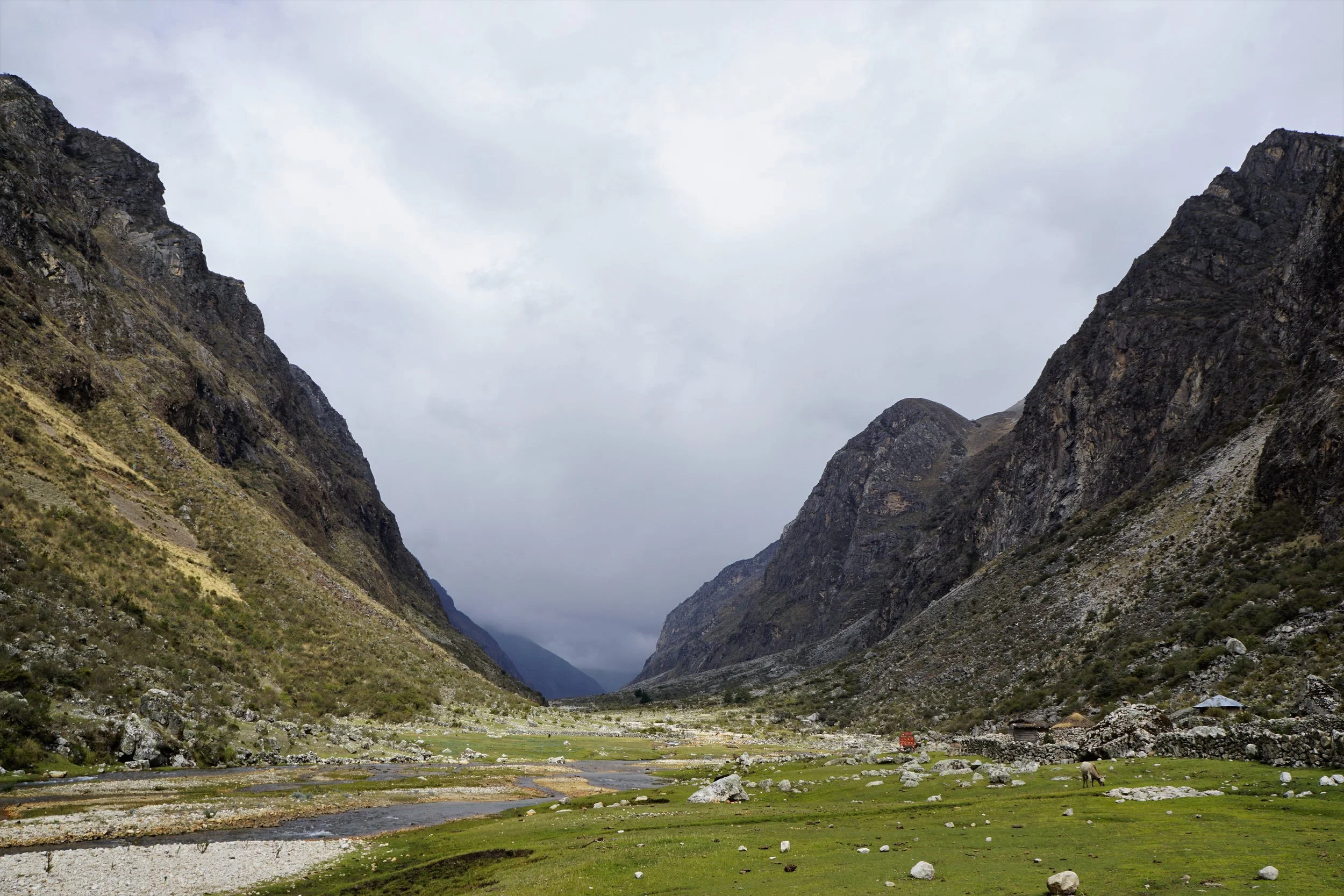
Upon leaving for this adventure I had some lofty goals for the time spent in Huaraz. I was set on completing the Huayhuash (Why-Wash) circuit. A grueling 9-12 day trek through the Cordillera Huayhuash Mountains in the Andes. Arriving in Huaraz with this goal in mind I immediately investigated the viability of completing what is widely regarded to as one of, if not the best mountain trek in the world.

After a quick 2 days in Lima (We will be passing through multiple times in the future) we hopped on an overnight bus to Huaraz. At 3100m/10000ft above sea level this small city at the foot of the Andes is the base of operations for some of the world's best trekking.

Our first days in Peru gave a quick taste of Lima, the capitol city of Peru. Home to about 10 million people (1/3 of the population) it's a bustling place. We stayed in Miraflores, considered the boogie part of town, and the hub for hostels and tourism. The city sits high on cliffs overlooking the Pacific Ocean and a good bus system plus easy to use combi buses makes it easy to get around.